When Oklahoma City University opened its mainstage performance season Oct. 2, audiences were transported to the Big Easy for a high-octane, jazz-infused revival of Gilbert and Sullivan’s classic story. Fresh off a recent Broadway run, “Pirates! The Penzance Musical” shifts the iconic 1880 plot from the English coast to the shores of New Orleans.
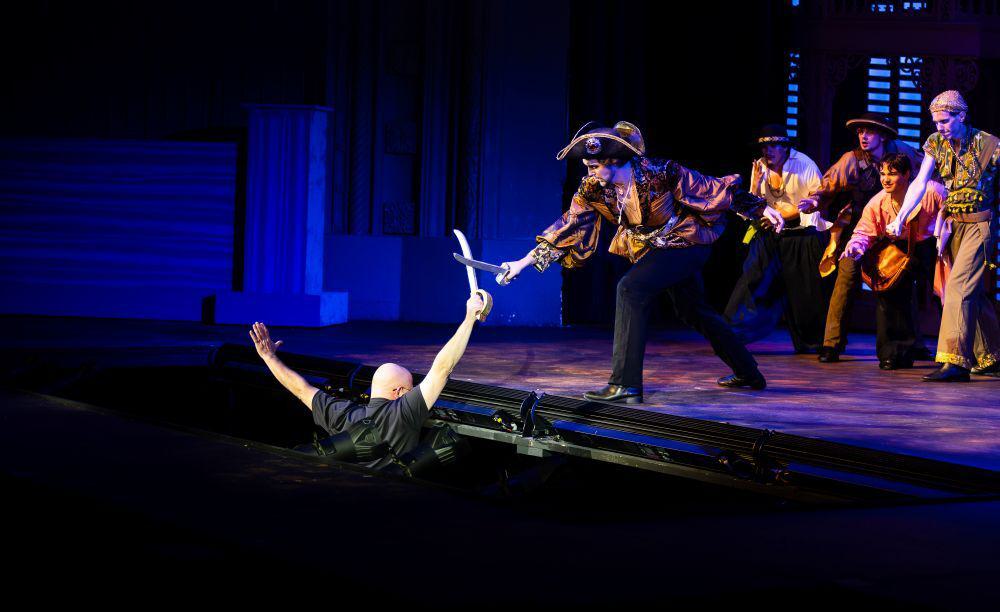
The result is a fast-paced and audience-friendly frolic where traditional operetta numbers morph into smoky jazz standards, and rapid-fire "patter" songs are delivered at breakneck speed. To bring theatergoers directly into the action, the production breaks the fourth wall using a passerelle—a stage extension in front of the orchestra pit—allowing performers to trade jokes and sword clashes alongside the pit conductor.
Beneath the laughs and physical comedy lies a contemporary message celebrating global diversity and unity, anchored by the show's final sentiment expressed in song: "We All Came from Someplace Else." Translating that blend of historical roots, jazz-era flair, and multicultural representation largely rests on the shoulders of the show’s costume team.
Costume team creates ‘Pirates!’ stitch by stitch
For senior acting major and show costume designer Adrian Montoya (and the faculty and staff working with him), bringing the production to life has been an eight-month trek of historical research, cross-cultural storytelling and practical engineering.
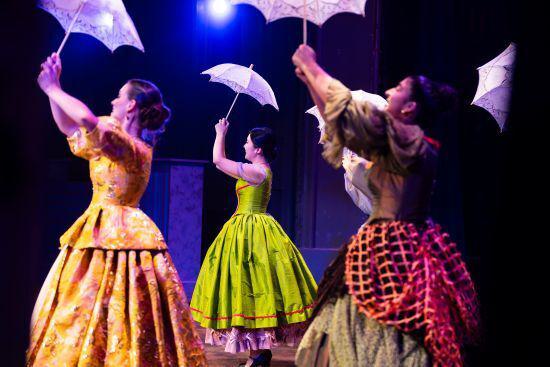
While the classic Gilbert and Sullivan operetta is famous for its zany antics and machine-gun lyrics, this contemporary New Orleans-based adaptation carries an intentional undercurrent: a celebration of global diversity. In the production, the Major General’s daughters and the band of swashbuckling pirates represent cultures from all over the world. The show delivers this premise in a way that Director David Herendeen describes as a "spoonful of sugar," a lighthearted way to deliver the deeper message that "we all came from someplace else."
To translate that message via costumes, Montoya set out to create distinct looks for each character while keeping the ensemble visually unified.
“No two look the same at all, and that was intentional,” Montoya explained. “I try not to be subtle. I really want to make it loud. Their cultures, too, those elements really just pop out.”
To achieve this, Montoya began by researching the mid-to-late Victorian silhouettes for the daughters. Once he established the core foundation, he let loose with colors, patterns and textiles representing the characters' roots. The pirates were a combination of historical research mixed with contemporary high-fashion influences.
The costumes also had to meet the physical demands of high-energy musical theater. Because the production features fast-paced choreography and tap routines, traditional period costume rules had to be modified. Skirts were intentionally crafted shorter than standard 1880s lengths so the audience can see the actors' feet during tap numbers. Additionally, waist-cinching corsets were scrapped to allow singers to breathe and move easier. They instead utilize soft-boned bodices to maintain a crisp shape without restricting dancing and sword fights.
Costume professor Alyssa Couturier-Herndon said Montoya’s work will be a strong asset to his portfolio.
“Designing a mainstage production of this scale as a costume minor is remarkably rare,” Couturier-Herndon noted. “Typically, we start designers off with a smaller production with fewer costumes, or a contemporary piece. However, Adrian has chosen to pursue costuming after graduation and wanted to challenge himself with the historical and contemporary research, design work and logistics this production demands. It's been a whirlwind learning experience both for our designer and the students building his costumes.”
Those hours of intricate work will become evident on opening night. When the curtain rises, the audience will see a colorful melting pot on stage as a visual celebration of global heritage.
Passerelle brings pirates into the seats
When the audience take their seats, they might notice something unusual before the overture even begins: the first two rows of auditorium seating are off limits.
In their place sits a passerelle, a temporary four-foot-wide walkway that extends from the standard existing stage and wraps around the orchestra pit. Rooted in traditional American vaudeville and popularized in modern stadium rock concerts, a passerelle creates an immersive bridge between the stage and the house.
For OCU scenic designer Jason Foreman and his team, adding the extension is all about breaking down the wall between the performers and the crowd.
“That’s the point—to get the performers out closer to the audience, to interact more,” Foreman said. “The actors are going to come right down the aisles and onto the walkway.”
The extension also creates a prime stage for one of the show’s most unique comedic bits: an interactive clash between the cast and orchestra pit conductor. Standing right on the edge of the pit platform, actors can perform directly beside the conductor, leading to a playful moment where the Pirate King engages him in an ongoing sword fight.
Building the walkway was a two-day project for the scenic shop and student crew, who used the build as a practical lesson in stagecraft construction. Designed to sit directly on the floor in front of the stage, the structure required no permanent modifications to the theater itself.
Navigating a raised platform directly over an open pit requires precision engineering and careful safety protocols. The four-foot width gives actors plenty of room for active choreography, while built-in kickboards along the perimeter let performers feel the platform's edge with their feet without having to break character or look down. The production schedule includes extra days of on-passerelle rehearsals so the actors can get used to the extension.
The first two rows of seats were taken off the market, turning the third row into an up-close front row. For the audience members sitting just inches from the walkway, the passerelle transforms a passive viewing experience into an energetic, front-row seat to the chaos.